
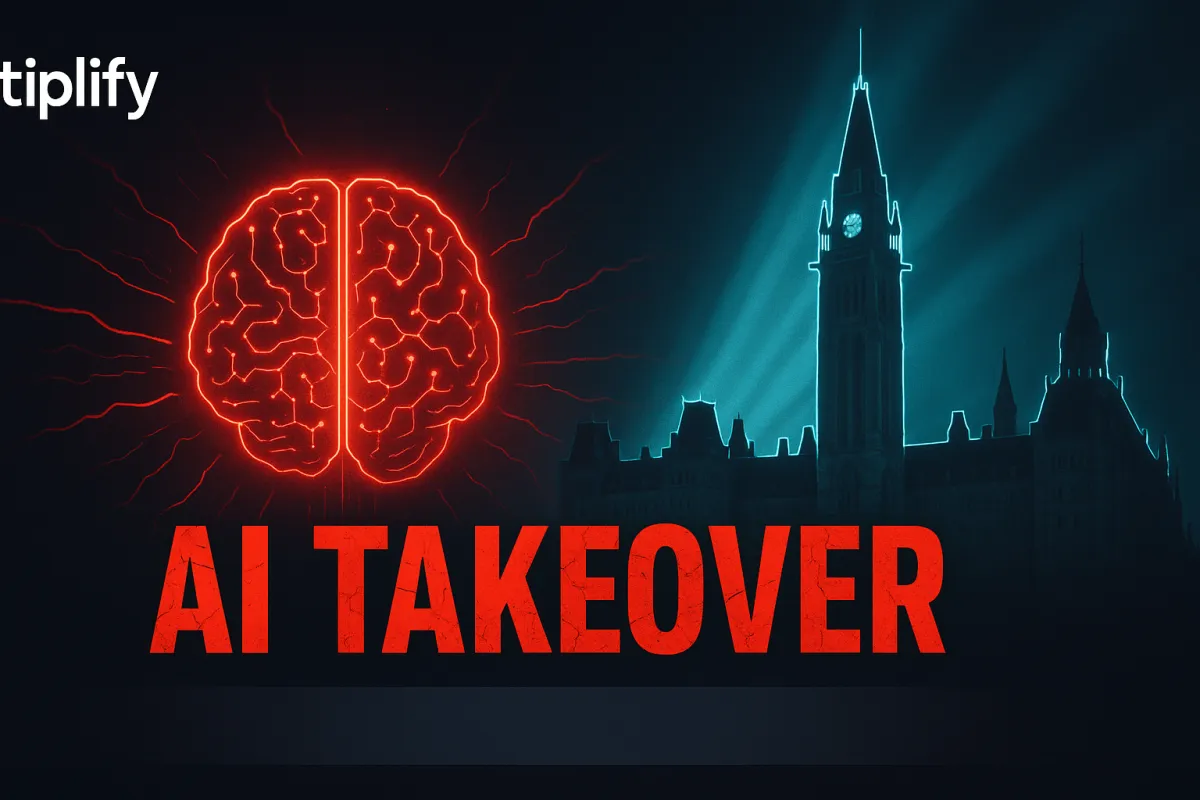
Ottawa Just Launched Canada’s ‘AI For All’ Strategy — And Canadian Business Owners Have Already Been Left Behind
Ottawa Just Launched Canada’s ‘AI For All’ Strategy — And Canadian Business Owners Have Already Been Left Behind
The federal government finally unveiled its long-awaited AI strategy. But if you think that’s good news, you haven’t read the fine print.

The Wake-Up Call Canadian Businesses Didn’t Ask For
On June 4, 2026, Prime Minister Mark Carney and AI Minister Evan Solomon stood before cameras in Toronto to announce Canada’s national “AI for All” strategy. It sounds impressive. But here’s the number that should terrify every entrepreneur in this country: 12%.
That’s the share of Canadian businesses currently using AI, according to Statistics Canada. Twelve. Per. Cent. Meanwhile, Nordic countries have 26–42% adoption. Germany is in the same range. We helped invent modern AI — and we’re using it less than almost anyone in the developed world.
The government’s big plan? Hit 60% adoption by 2034. That’s eight years from now. In tech terms, that’s several lifetimes. The Business Development Bank of Canada (BDC) is putting up $500 million through its LIFT program to help small and medium-sized businesses access AI financing. A free AI literacy program will be offered at public libraries. Noble efforts — but the urgency on the ground is far outpacing Ottawa’s timeline.
Perhaps nothing illustrates the gap better than the CRA’s own AI chatbot, “Charlie” — scrapped because it delivered wrong answers 67% of the time. If the government can’t get AI right internally, the road ahead for Canadian SMEs is longer than any strategy document admits.
While Ottawa Planned, AI Was Already Firing Canadians
Here’s what was happening while the federal government was busy drafting strategy documents:
- Lightspeed Commerce (Montreal-based) cut its customer support team after AI resolved over 80% of inbound chat interactions. Gone — no retraining, no soft landing.
- AWS confirmed in January 2026 that Canadian employees were part of its 16,000-person global reduction. The company refused to disclose how many Canadians were cut.
- Microsoft announced 9,000 global layoffs, with Vancouver, BC operations confirmed as impacted.
- Globally, 55% of 2026 tech layoff events explicitly cite AI as a contributing factor (SkillSyncer tracker).
- Over 100,000 tech workers have already lost jobs to AI-driven restructuring in 2026 alone.
What makes this wave truly alarming is that these aren’t struggling companies desperate to cut costs. Oracle cut up to 30,000 people while posting strong earnings. Meta laid off 8,000 workers to fund AI spending. This is profitable corporations choosing AI infrastructure over human capital. The message is unambiguous.
The human cost is real: the employee “thriving” score has collapsed globally from 66% in 2024 to just 44% today. Unions like CUPE are furious, and rightly so. The federal AI strategy makes no binding commitments to protect workers displaced by AI — no legislation to require retraining, no bar on AI-funded companies eliminating human staff. Voluntary pledges and hope-for-the-best are not a workforce strategy.

The Clock Is Ticking for Canadian Marketers
If you’re a Canadian business owner or marketer thinking “this doesn’t affect me,” think again. AI isn’t just cutting jobs at tech giants — it’s quietly dismantling the marketing playbook your business has relied on for years.
Traditional SEO? AI-powered discovery is now challenging website-driven marketing models across Canada. The Q1 2026 Marketing & Media Retail Report confirmed: marketing infrastructure is now a competitive advantage, not a nice-to-have. First-party data, promotional automation, and AI-driven customer engagement are today’s baseline — not tomorrow’s trend.
Here’s the opportunity buried inside the crisis: only 8% of Canadian SMEs have wired AI into operations. That gap is massive. The brands that move now — automating their marketing, systematizing their customer journeys, building AI-assisted funnels — will own the next market cycle. The ones waiting for Ottawa? They’ll be reading the post-mortem.
And consider this: 67% of Canadians say they’re nervous about AI. That means your customers are unsettled. The business owners who communicate confidence, competence, and forward-thinking will build trust fast while competitors are paralyzed by uncertainty.
What This Means for Your Business Right Now
You cannot wait for Ottawa. The strategy is a starting point, not a safety net. The 2034 adoption target is meaningless if your competitor integrates AI this quarter. The businesses surviving — and winning — this wave share one thing in common: they moved early on automation.
They integrated AI into marketing, customer service, and operations before it became survival-critical. They didn’t wait for $500M government programs. They built systems that compound over time.
The question is brutally simple: Are you building your business to win the next 18 months, or waiting for a government program that won’t arrive until your market has already moved?
Stay Ahead With Stiplify
At Stiplify, we help Canadian businesses cut through the noise and build smart automation systems that actually drive results. From AI-powered marketing pipelines to CRM automation that works while you sleep — we’re built for entrepreneurs who can’t afford to wait for 2034.
The AI wave is here. The question is whether you’re surfing it or getting crushed by it. Let’s build your competitive edge together.